2026-09-15 ·
Affordable Irrigation Solutions for Tucson Businesses
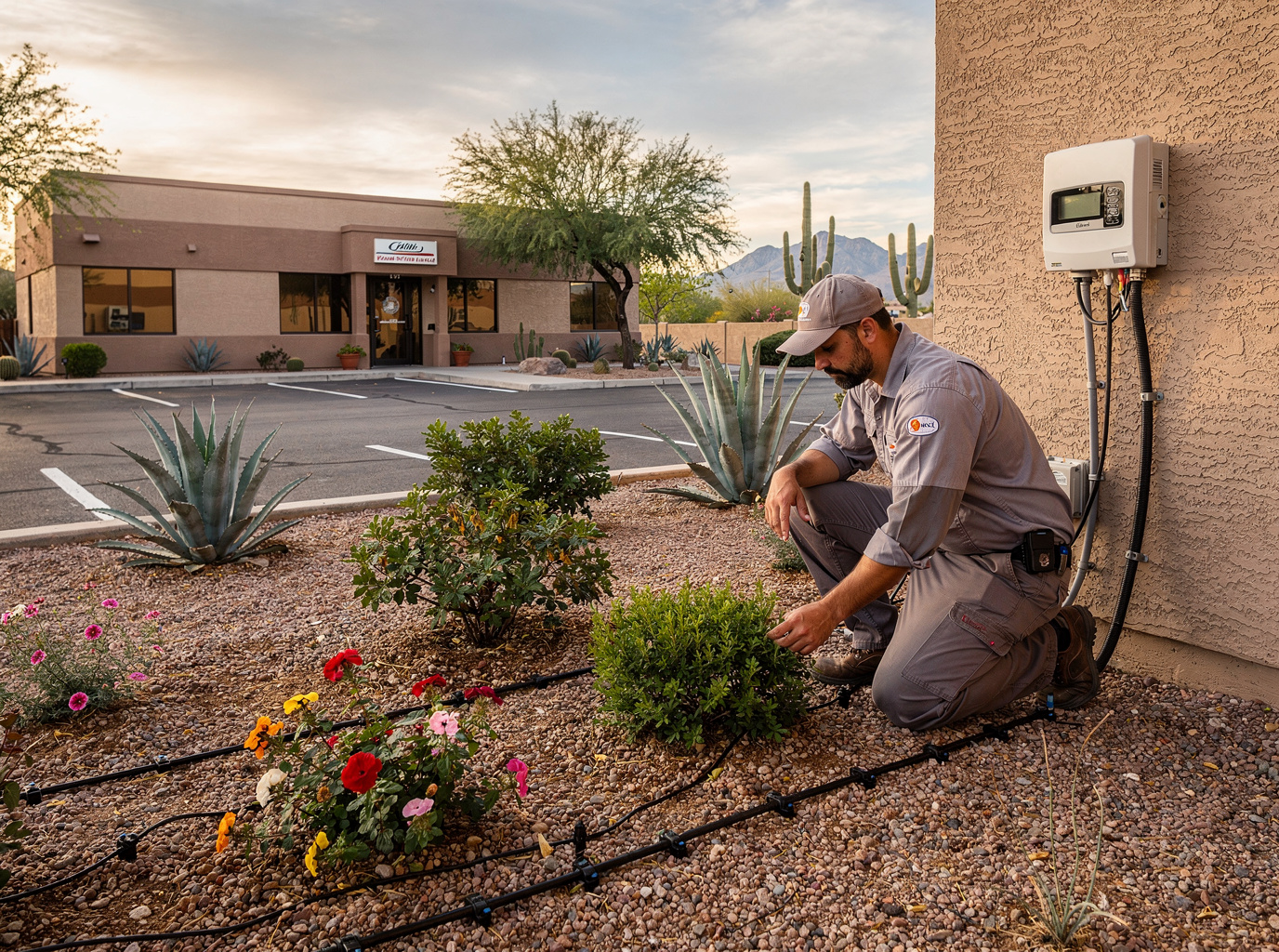
Tucson businesses can restore reliable irrigation performance with targeted repairs typically ranging from $250–$900 per zone rather than complete system replacements. This approach addresses common issues in commercial landscapes around areas like the University of Arizona district and south Tucson industrial parks where older PVC lines and high-pressure zones fail first. Local conditions including alkaline soil, hard water from the Central Arizona Project, and intense summer heat accelerate wear on valves and emitters, making early detection the key to keeping expenses low.
Initial System Evaluation
A professional inspection reveals exactly which components need attention before costs escalate. In Tucson, commercial properties often show stress on laterals and heads after monsoon debris clogs filters or shifts soil. Technicians check pressure at multiple points, test backflow devices, and map zones to identify leaks that waste water during peak evaporation months. This step alone prevents unnecessary work on systems serving parking lot medians or office courtyards where water demand spikes in spring and fall.
Targeted Repair Strategies
Focusing on specific failures keeps budgets manageable for Tucson businesses. Common fixes include replacing cracked irrigation valves, clearing clogged drip emitters, and sealing small main-line leaks that appear after ground shifts from temperature swings. Properties in neighborhoods such as Tanque Verde and Catalina Foothills benefit from prompt attention to lateral line issues caused by tree roots seeking moisture. These repairs restore even coverage without disturbing established desert-adapted plantings that many commercial sites maintain.
Business owners also schedule irrigation repair during shoulder seasons to avoid peak demand pricing. Addressing one or two zones at a time spreads costs while keeping the rest of the property functional. Hard water deposits in Tucson frequently shorten sprinkler head life, so swapping only damaged heads rather than entire manifolds delivers measurable savings.
Efficiency Audits and Upgrades
An irrigation efficiency audit identifies water waste patterns unique to Arizona commercial sites. Auditors measure distribution uniformity, note overspray onto pavement, and recommend pressure regulation or emitter adjustments suited to local evapotranspiration rates. Many Tucson businesses see reduced monthly bills after minor tweaks like adding rain sensors or reprogramming controllers to skip cycles during monsoon periods.
Smart controller installation further lowers long-term expenses by using local weather data. Properties in Oro Valley and Marana often combine audits with zone additions only where new landscaping requires it, avoiding blanket system overhauls.
Seasonal Adjustments and Ongoing Care
Regular seasonal irrigation adjustment prevents small problems from becoming expensive failures. Tucson systems need winter shutdowns to protect lines from rare freezes and spring startups that flush sediment before summer heat arrives. Commercial sites near Rita Ranch or Vail benefit from scheduled checks that account for dust accumulation on sensors and valves. Consistent maintenance extends component life in alkaline soils that corrode metal parts faster than in milder climates.
Readers seeking more homeowner-focused strategies can review affordable irrigation repair tips for Arizona. Those wanting regulatory context should examine Arizona water regulations that influence permitted repairs and reporting requirements for larger properties.