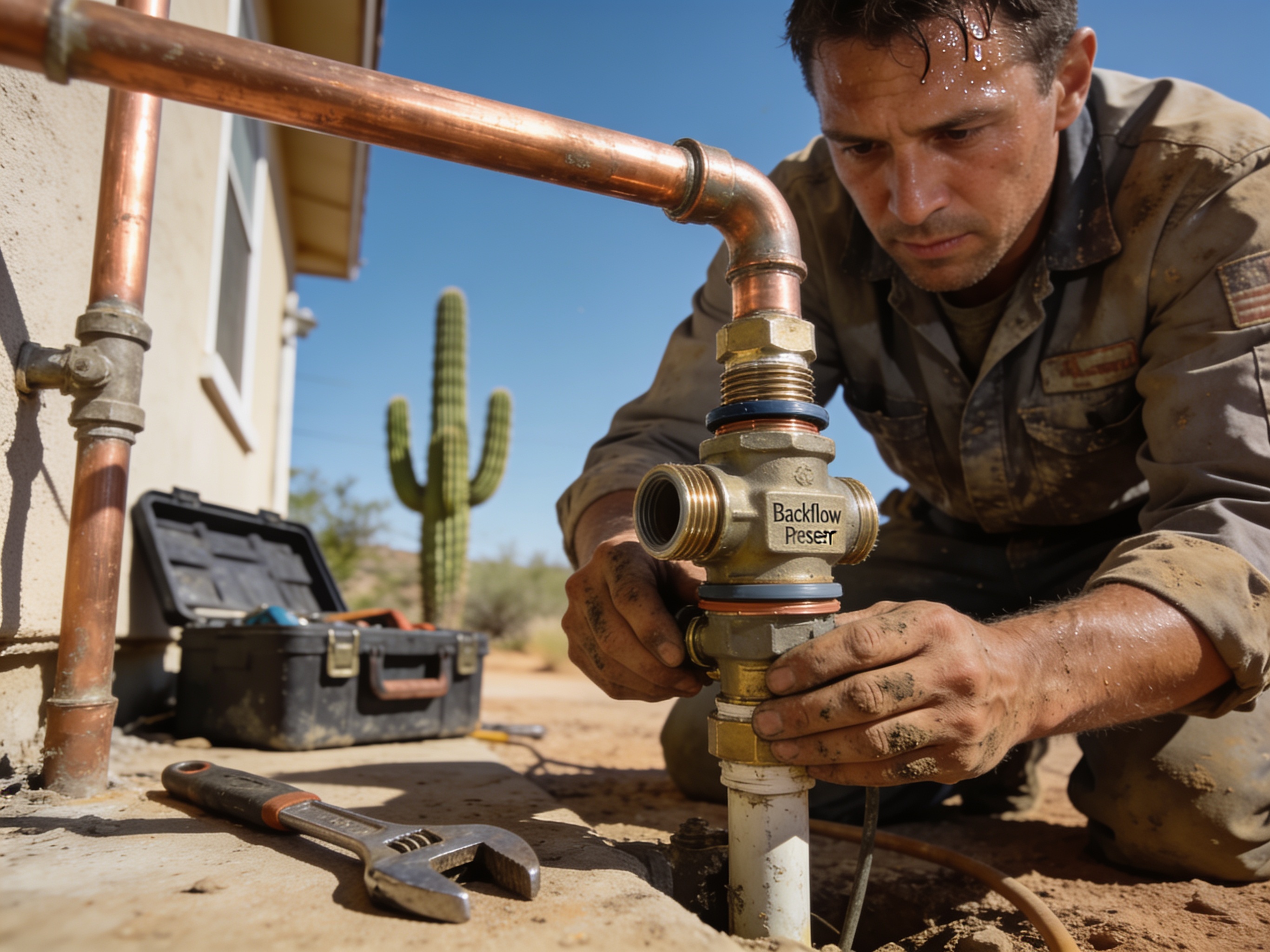
Arizona's hard water and occasional monsoon flows create specific risks for irrigation systems pulling from municipal supplies. Backflow preventers stop contaminated water from reversing into household lines during pressure drops, a common issue in older Tucson homes built before modern codes tightened in Pima County. Proper installation requires selecting reduced pressure zone or double check valves rated for local soil conditions and pipe sizes common in East Tucson neighborhoods.
Homeowners often overlook that Tucson irrigation lines run through caliche-heavy soil that shifts with seasonal temperature swings, stressing connections and increasing leak risks around the device. We mount units on stable risers above grade to allow inspection access and prevent debris buildup from dust storms. Edge cases include retrofitting systems on properties near the Rillito River where groundwater fluctuations can affect pressure differentials.
Tucson code requires annual testing after installation, and we position valves in accessible locations to simplify future checks without excavation. Materials must resist UV degradation and mineral scaling from the area's water chemistry. Skipping proper placement near the meter or main line often leads to repeated failures during summer demand spikes when city pressure fluctuates.
Installation timing matters because winter lows can freeze exposed valves even in southern Arizona, while summer heat demands shaded or insulated housings. We always verify existing system age and pipe material before cutting in new devices to avoid compounding issues in 1970s-1990s tract homes common here.
Technician insight
In Arizona the thing that catches most people out with backflow preventer installation is how fast hard water scale builds on the test cocks when units sit low to the ground in dusty Tucson yards. Older homes near 22nd Street often have galvanized lines that crack during the cut-in if you don't support them properly before soldering.
East Tucson Retrofit
A 1980s home irrigation system kept failing pressure tests after monsoon rains. We found the old inline valve buried too deep in shifting soil near the meter. We replaced it with a properly elevated reduced-pressure unit on a new riser and restored full protection without disturbing the established landscaping.
Backflow Preventer Installation Services We Offer
✓Residential Backflow Preventer Installation
Installs code-approved valves on single-family irrigation systems to block reverse flow from lawn chemicals and fertilizers into Tucson home water supplies.
✓Irrigation Backflow Valve Replacement
Swaps out failed or outdated units on existing Arizona sprinkler lines, restoring protection without full system excavation in established Eastside neighborhoods.
✓Commercial Backflow Device Installation
Fits larger reduced-pressure assemblies on multi-unit and business properties to meet Pima County requirements for higher-volume Tucson irrigation setups.
✓Backflow Preventer Testing Service
Performs required annual tests and tagging on installed devices to keep systems compliant before monsoon season pressure changes hit Arizona lines.
✓New Construction Backflow Integration
Coordinates valve placement during new irrigation builds in developing Tucson subdivisions, ensuring proper height and access from the start.
Backflow Preventer Installation Cost in Arizona, Tucson
| Service | Typical Range | What Affects It |
|---|---|---|
| Standard Residential Installation | $350–$650 | Varies with pipe size and whether excavation is needed in caliche soil |
| Commercial Device Install | $800–$1,400 | Larger assemblies and higher flow requirements common on Arizona business properties |
| Valve Replacement Only | $250–$450 | Assumes existing piping is accessible without major trenching |
| Initial Test and Tag | $75–$125 | Required after any new installation in Pima County |
Ranges are typical for Arizona, Tucson and confirmed with an exact written quote before any work starts.
How it works
- 1
Site Assessment
Inspect existing irrigation layout, meter location, and soil conditions at the Tucson property to determine valve type and placement.
- 2
Permit and Code Check
Confirm Pima County requirements and select the correct device rating for the system's pressure and flow needs.
- 3
Installation
Cut into the main line, mount the backflow preventer on a stable riser, and connect with appropriate fittings rated for local water chemistry.
- 4
Testing and Handover
Pressurize the system, perform initial backflow test, and explain maintenance access points to the homeowner.
Pricing
Costs depend on system size, valve type, and access difficulty in Tucson yards.