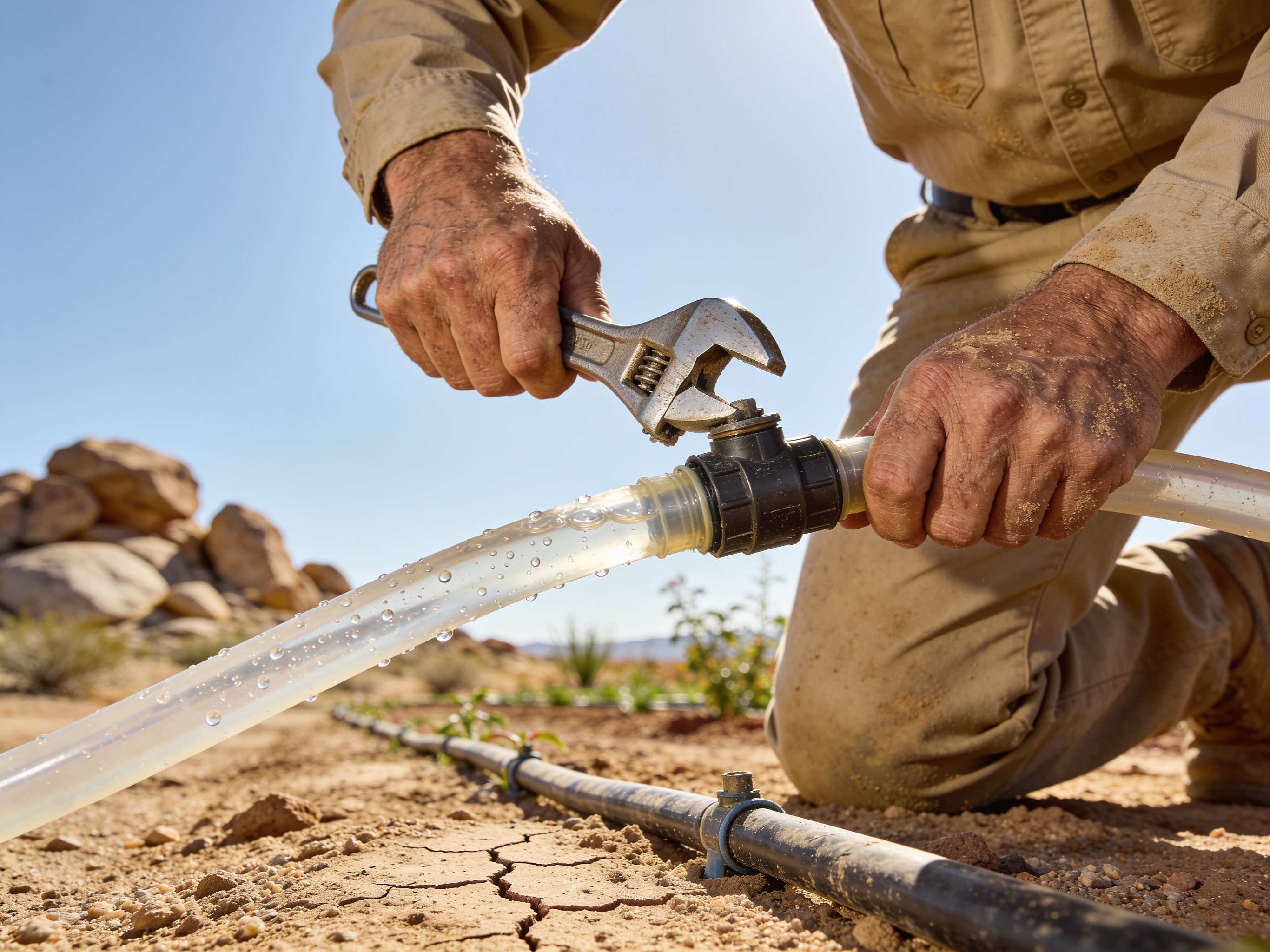
Tucson drip systems use 1/2-inch poly tubing and pressure-compensating emitters rated for 1-2 GPH. Extreme summer heat above 105°F hardens the tubing and causes cracking at fittings, while Pima County water leaves calcium scale that clogs emitters within two seasons. Technicians cut out damaged sections and replace with UV-stabilized tubing rather than patching, because patches fail again after the next monsoon surge.
Root intrusion from mesquite and palo verde trees is common on older Eastside lots where drip lines run near foundations. The roots enter emitter outlets and block flow, creating dry zones that stress plants. We pull lines where possible, flush with a mild acid solution approved for irrigation, and reinstall emitters on new risers to keep roots from reaching the outlets again.
Monsoon debris and sudden pressure spikes from city valves often crack manifolds or blow out filters on systems installed before 2010. We check the backflow preventer and pressure regulator first because a failed regulator sends full city pressure through the drip lines and destroys emitters. Replacement regulators are set to 20-30 PSI to match the original design.
Technician insight
In Arizona the thing that catches most people out with drip irrigation repair is assuming the emitters are the only problem when the real issue is a regulator that failed years ago and let full city pressure cook the lines. On Eastside homes with 20-year-old systems we see this every week.
Eastside home with dead rosemary and cracked tubing
The homeowner noticed two zones running dry after the first monsoon. We found cracked 1/2-inch tubing at three fittings and a regulator stuck at 55 PSI. After replacing the regulator, splicing the damaged sections, and installing new emitters, the zones watered evenly again without further blowouts.
Drip Irrigation Repair Services We Offer
✓Emitter Cleaning and Replacement
Remove scale and debris from existing emitters or install new pressure-compensating units to restore even flow across zones.
✓Drip Line Leak Repair
Locate and splice damaged poly tubing sections caused by UV exposure or root penetration on Tucson lots.
✓Pressure Regulator Service
Adjust or replace regulators to maintain 20-30 PSI and prevent emitter blowout during city pressure surges.
✓Filter and Valve Cleaning
Clean screen filters and solenoid valves clogged by monsoon sediment and hard-water deposits common in Pima County.
✓Root Intrusion Removal
Extract roots from emitters and reroute lines away from aggressive desert trees on older Eastside properties.
Drip Irrigation Repair Cost in Arizona, Tucson
| Service | Typical Range | What Affects It |
|---|---|---|
| Single zone emitter replacement | $175–$275 | Price rises with number of emitters and access difficulty around established plantings. |
| Drip line splice or section replacement | $225–$400 | Depends on length of line and whether trenching near trees or hardscape is required. |
| Pressure regulator replacement | $150–$250 | Includes new regulator and adjustment to 20-30 PSI for Tucson city pressure. |
| Full zone filter and valve service | $200–$350 | Covers cleaning or replacement plus debris flush after monsoon season. |
Ranges are typical for Arizona, Tucson and confirmed with an exact written quote before any work starts.
How it works
- 1
Zone Inspection
Walk each zone and note dry spots, wet patches, and emitter condition while the system runs.
- 2
Pressure and Flow Test
Measure pressure at the valve and flow at the end of each line to identify restrictions or regulator failure.
- 3
Repair and Flush
Replace damaged tubing and emitters, then flush lines to clear remaining scale before reassembly.
- 4
Final Zone Check
Run the system again and confirm even coverage across the repaired zones.
Pricing
Most drip irrigation repair jobs fall between $175 and $550 depending on number of zones and extent of tubing replacement.