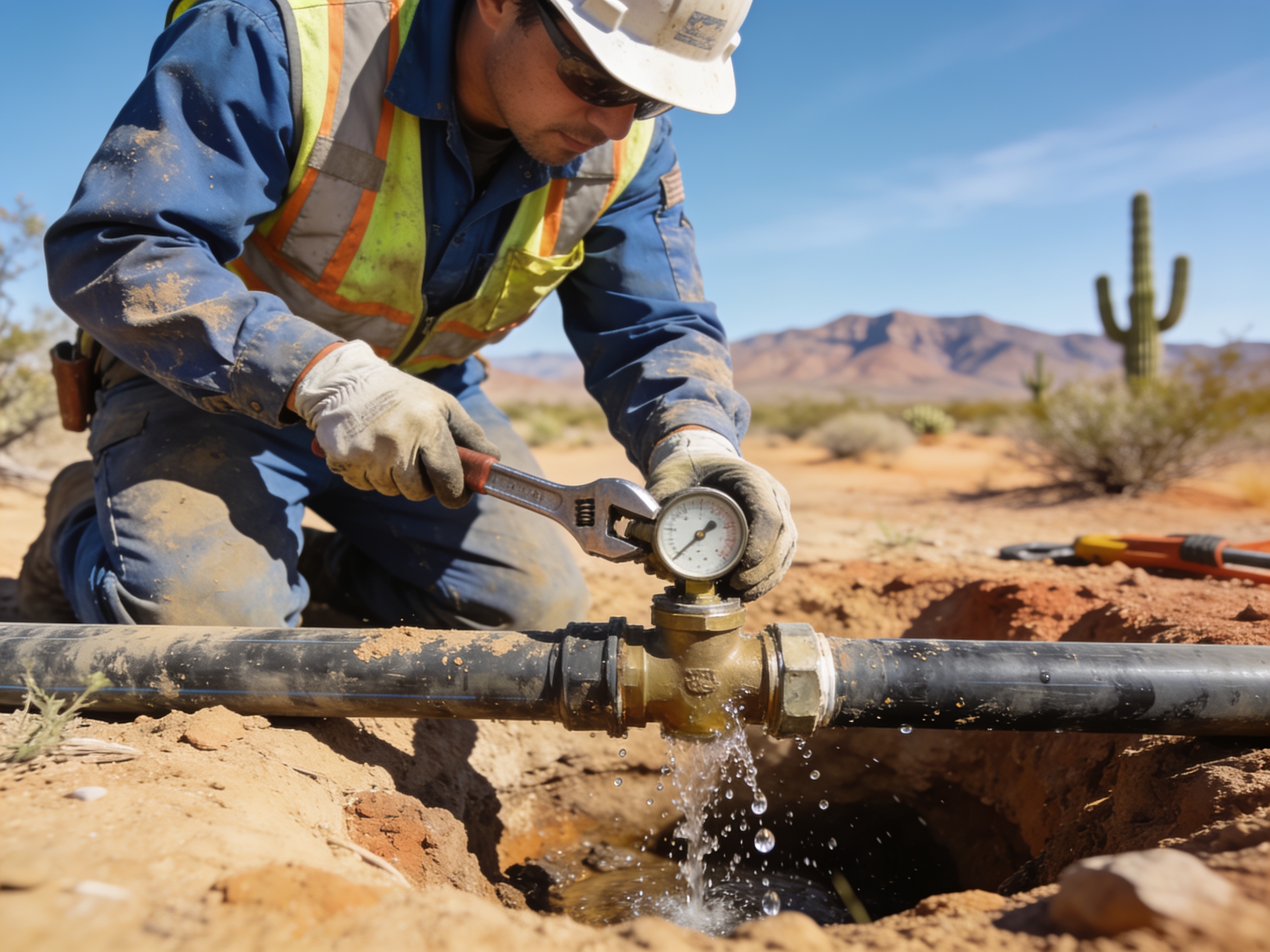
Tucson systems often lose pressure from mineral scale that builds inside valves and lines fed by the city’s hard groundwater. Homes east of Swan Road, many with original 1980s PVC laterals, see the narrowest passages clog first during the long dry season. We isolate the zone, measure static and dynamic pressure at the backflow preventer, then decide whether a regulator adjustment, valve rebuild, or line flush will restore flow without replacing the entire manifold.
High pressure from monsoon surges can crack heads and split risers in yards with steep slope toward the Pantano Wash. We install pressure-reducing valves rated for 150 psi spikes and set them to 40 psi at the head, the level most rotors need for proper throw in our clay-loam soils. Every repair includes a post-fix audit with the controller running so we catch any zone that still shows uneven coverage before we leave the property.
Pima County requires backflow devices to be tested after any pressure-related work that opens the main line. We perform the test on site and leave the completed form for the homeowner to file. Because our shop sits at 7240 E 22nd St, we can reach most East Side addresses within thirty minutes, which keeps labor costs lower than companies driving in from the northwest side.
Technician insight
In Arizona, the thing that catches most people out with irrigation pressure repair is the rapid scale that forms inside valves during our 100-plus degree stretches; East Tucson homes from the 1970s and 80s lose pressure first because the original 3/4-inch laterals were never oversized for today’s higher city supply pressure.
Low pressure on east-facing slope
A homeowner in the 22nd Street corridor reported half the rotors failing to reach the sidewalk. We found heavy calcium buildup inside the master valve. After replacing the diaphragm and flushing the line we reset the new regulator to 40 psi. Evening coverage returned across the slope without overspray onto the driveway.
Irrigation Pressure Repair Services We Offer
✓Pressure Regulator Installation
Mount and calibrate a new regulator at the valve box to hold consistent 35-45 psi across zones despite Tucson’s daily temperature swings.
✓Valve Diaphragm and Spring Replacement
Replace worn diaphragms and springs in Rain Bird and Hunter valves so they open fully and maintain set pressure without weeping.
✓Main Line Pressure Testing
Pressurize the buried main with a gauge to locate leaks or restrictions before they cause dry spots in the lawn.
✓Sprinkler Head Pressure Adjustment
Swap nozzles and adjust stems on rotors and sprays so each head delivers the correct radius without misting or under-throw.
✓Backflow Preventer Pressure Check
Test and reset the backflow assembly to meet county requirements while restoring full downstream pressure.
Irrigation Pressure Repair Cost in Arizona, Tucson
| Service | Typical Range | What Affects It |
|---|---|---|
| Pressure regulator install | $225–$375 | Price rises with 1-inch versus 3/4-inch line size |
| Valve diaphragm and spring kit | $175–$275 | Includes flushing the valve body |
| Main line pressure test and locate | $150–$250 | Higher when excavation is required |
| Full zone head adjustment set | $200–$325 | Covers up to 12 heads |
Ranges are typical for Arizona, Tucson and confirmed with an exact written quote before any work starts.
How it works
- 1
Zone Isolation
We turn on each station and record pressure at the valve and farthest head to pinpoint which zone is affected.
- 2
Component Inspection
Valves, regulators, and accessible pipe sections are opened and checked for scale, debris, or failed seals common in Tucson water.
- 3
Corrective Repair
We replace or adjust the failing part, flush the line, and retest pressure at multiple points along the zone.
- 4
Final System Audit
All zones are run again, coverage is verified, and the backflow test form is completed before we leave the site.
Pricing
Most Tucson irrigation pressure repairs fall between $175 and $550 depending on parts needed and access to the valve box.