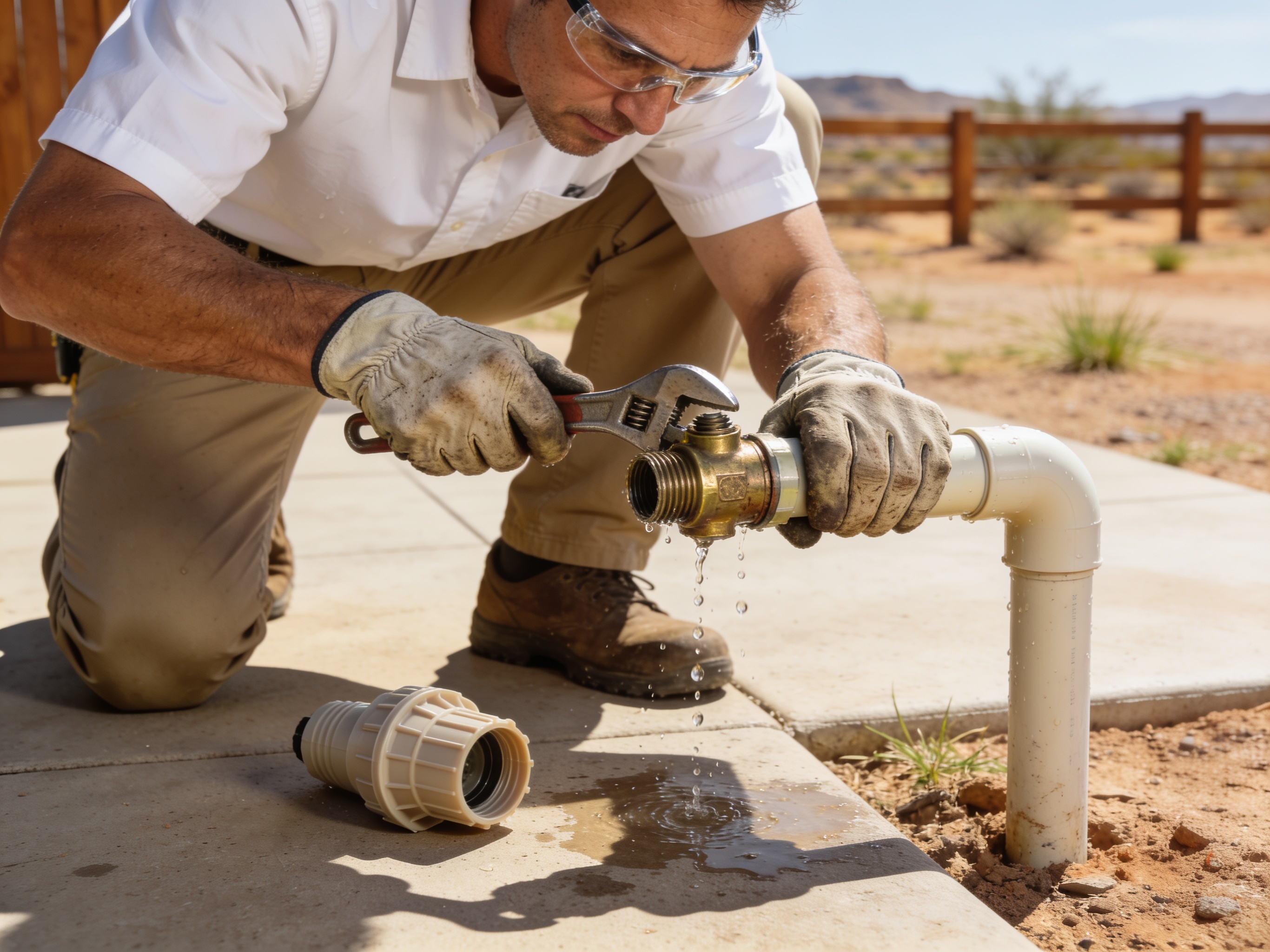
Tucson homes built from the 1970s through the 1990s often have original irrigation lines feeding spray heads that crack under daily 100-plus degree exposure and mineral buildup from Colorado River water. Replacing a head requires matching thread size and spray pattern to the existing zone while flushing sediment that accumulates in the valve box near the street. Technicians working out of the 22nd Street shop carry both plastic and brass bodies to handle the mix of residential systems found in neighborhoods east of Swan Road.
Monsoon season brings sudden debris that clogs nozzles and lifts heads out of their sleeves, creating dry spots that homeowners notice first in the afternoons. A proper replacement includes checking the swing joint below the head for stress cracks caused by shifting caliche soil, then re-leveling the top so mowers clear it cleanly. Skipping this step leads to repeated failures within a single summer.
Pima County watering restrictions and the high evaporation rate mean systems run on short cycles, so pressure surges hit older heads harder than in milder climates. When replacing multiple heads on one zone, we test the entire line for leaks at the fittings rather than assuming the new heads will solve low-pressure complaints.
Homeowners in Rita Ranch and the Foothills often discover that their rotary heads were installed with the wrong radius after the original landscaper left, wasting water on sidewalks. Swapping to matched precipitation nozzles during replacement keeps the zone balanced without adding a new valve.
Technician insight
In Arizona the thing that catches most people out with sprinkler head replacement is assuming the old swing joint is fine when the head is only three feet from the street. On Eastside lots with caliche under the topsoil, those joints crack from the first monsoon and then leak under the new head within weeks.
Stuck heads on a Rita Ranch side yard
Two pop-up heads on the west side of a 1980s home stayed up after every cycle, allowing mower damage and dry grass patches. We found sand packed inside the stems from the nearby wash. After replacing the heads and flushing the line back to the valve box, the zone ran clean and retracted properly.
Sprinkler Head Replacement Services We Offer
✓Pop-Up Sprinkler Head Replacement
Swap failing 4-inch and 6-inch pop-ups that stick up or fail to retract due to sand and hard water scale common in Tucson yards.
✓Rotary Sprinkler Head Replacement
Install new rotary heads with correct arc and radius to fix uneven coverage on larger Eastside lots where older models wear out faster.
✓Spray Nozzle Upgrade During Head Replacement
Replace worn nozzles with pressure-regulated versions while the head is out, reducing misting caused by Tucson's high afternoon temperatures.
✓Valve Box Head Replacement
Access and replace heads inside valve boxes that have been damaged by monsoon flooding and root intrusion around 22nd Street properties.
✓Drip-to-Spray Conversion Heads
Convert outdated drip emitters to modern spray heads on beds where homeowners want better coverage without running new tubing.
Sprinkler Head Replacement Cost in Arizona, Tucson
| Service | Typical Range | What Affects It |
|---|---|---|
| Standard pop-up head replacement | $65–$110 | Price rises with depth or when swing joint must be replaced. |
| Rotary head replacement | $95–$160 | Larger radius heads and pressure regulation add cost. |
| Multiple heads on one zone | $55–$85 per head | Discount applies after the first head when lines are already open. |
Ranges are typical for Arizona, Tucson and confirmed with an exact written quote before any work starts.
How it works
- 1
Zone Inspection
Run each zone from the controller at the 22nd Street shop address to identify which heads are stuck, clogged, or missing.
- 2
Head Removal and Flush
Remove the old head, flush the lateral line to clear sediment, and inspect the swing joint for cracks caused by shifting soil.
- 3
New Head Selection and Install
Match thread, height, and spray pattern to the zone, then set the new head level with finished grade.
- 4
Final Zone Test
Re-run the zone and adjust arcs so coverage reaches the edges without overspray onto pavement.
Pricing
Most single-head replacements on Tucson residential systems fall between basic spray and rotary models.